
African Leaders Launch Livestock Trade Development Plan: What It Means for
Kenyan Farmers
At the inaugural African Pastoral Markets Forum in Addis Ababa, ministers from Ethiopia, Nigeria, Kenya, Uganda and Somalia – alongside the African Union Commission – agreed on measures to strengthen regional livestock trade and increase value addition. The forum, convened by the AU‑IBAR, marked a turning point for a sector that has long been overlooked.
While leaders debated continental trade policies, thousands of Kenyans followed the news through mobile apps – including the 888starz bet app – to understand how these changes would affect farmers and the country’s agricultural future.
Africa’s Livestock Potential – and the Paradox
Africa possesses nearly one‑third of the world’s livestock resources. Yet the continent continues to export live animals while importing processed meat and dairy products. This paradox lies at the heart of the new agenda.
African Union Commissioner for Agriculture, Moses Vilakati, described the pastoral livestock economy as one of Africa’s most valuable but underdeveloped sectors. He called for increased investment in livestock corridors, animal health systems, water infrastructure and harmonised cross‑border trade regulations.
What Kenya Is Doing
Kenya is already taking concrete steps to modernise its livestock sector. Principal Secretary for Livestock, Jonathan Mwangangi Mueke, told the forum that the country is digitising veterinary certification, modernising meat inspection, streamlining export licensing and organising pastoralists into commercially viable livestock investment entities capable of accessing finance, insurance and larger markets.
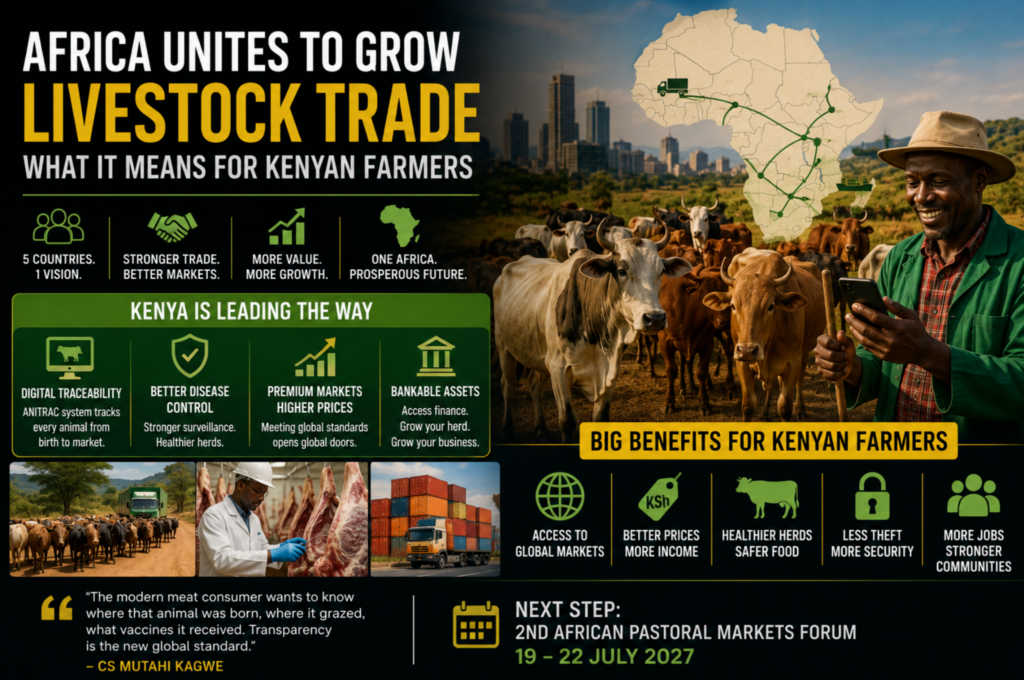
At the centre of these reforms is the Animal Identification and Traceability System (ANITRAC) – a digital platform that uses electronic ear tags to create a lifetime record for every animal, from birth and vaccination to movement, slaughter and export. Agriculture CS Mutahi Kagwe explained that the system will open up lucrative international export markets by ensuring Kenya complies with global sanitary and phytosanitary standards.
“The modern meat consumer wants to know more than whether meat is safe. They want to know where that animal was born, where it grazed, which veterinary officer treated it, which vaccines it received – that level of transparency is no longer optional; it is becoming the global standard,” Kagwe said.
The system will also help curb cattle rustling, strengthen disease surveillance, and allow livestock to be recognised as verifiable bankable assets – unlocking financing opportunities for farmers.
How This Helps Kenyan Farmers
For Kenya’s pastoralists and smallholder farmers, the new measures translate into concrete benefits:
To stay updated on how Kenya is transforming its livestock sector and opening new export opportunities, you can do a 888bet apk and follow the most important news wherever you are.
What Was Agreed at the Forum
The ministerial session produced a series of commitments aimed at transforming Africa’s pastoral livestock economy:
The forum also confirmed that the Second African Pastoral Markets Forum will be held from 19 to 22 July 2027, with a stronger commercial focus.
What’s Next for Kenya
Kenya is already positioning itself as a leader in Africa’s livestock transformation. With the rollout of ANITRAC targeting over 22 million cattle across the country, the government is building the infrastructure needed to unlock the sector’s full potential.
The country’s ambition is clear: to grow the livestock industry into a Sh1 trillion economic powerhouse within the next two years. Digital traceability, modernised meat inspection and streamlined certification are the tools to get there.
Download the 888bet iOS app and follow how Kenya is transforming its livestock sector and opening new opportunities for farmers across the country.
FAQ
What is the African Pastoral Markets Forum?
A five‑day continental event that brought together African policymakers, investors, and pastoral enterprises to catalyse investment and unlock trade in Africa’s pastoral livestock sector.
What did African ministers agree on?
Ministers from Ethiopia, Nigeria, Kenya, Uganda and Somalia agreed on measures to strengthen regional livestock trade, increase value addition, modernise livestock markets and strengthen disease surveillance.
How is Kenya digitising its livestock sector?
Kenya is rolling out the Animal Identification and Traceability System (ANITRAC), which uses electronic ear tags to create a lifetime digital record for every animal.
What are the benefits for Kenyan farmers?
Better access to premium export markets, higher prices, improved disease control, bankable assets and reduced cattle rustling.
When is the next forum?
The Second African Pastoral Markets Forum will be held from 19 to 22 July 2027.