
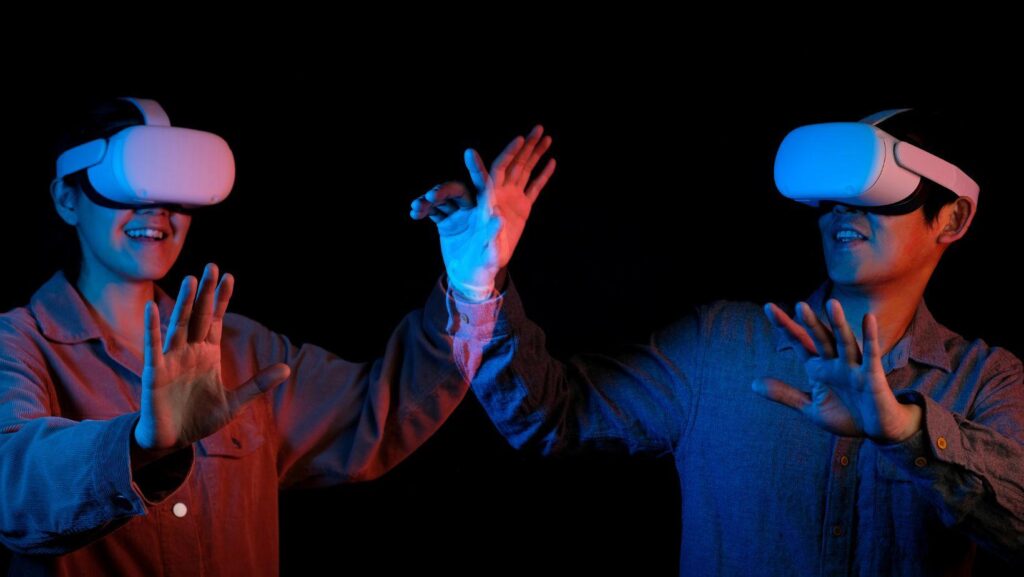
Something shifted in the last eighteen months. VR headsets stopped being the expensive curiosity gathering dust on a shelf and started showing up as the primary screen for a meaningful slice of American gamers. Valve’s Steam Frame landing in US warehouses this summer, Meta’s next-gen hardware push, and a wave of seven new AR devices revealed in July 2026 alone. It’s a lot hitting at once. The question worth asking isn’t whether immersive hardware is coming. It’s whether the platforms Americans actually use every day are ready for it.
Where the Numbers Actually Stand
The combined AR and VR market hit $97.41 billion globally in 2026, with gaming consistently ranked as the leading consumer application, according to MarketsandMarkets’ sector analysis. That figure would have sounded absurd in 2021. It doesn’t anymore.
American players are driving a significant portion of that growth. Gaming is deeply embedded in US culture at every age bracket. Not just among teenagers, though Pew Research Center’s data is instructive here: roughly 85% of US teens reported playing video games regularly, with online multiplayer formats dominating their time. The adult numbers are climbing in the same direction. Remote, screen-mediated entertainment normalized itself during the early 2020s and never fully walked back.
What’s changed in 2026 is the hardware bottleneck finally loosening. Headsets are lighter. Refresh rates are higher. Standalone processing means you don’t need a tethered gaming PC to get a decent experience. And critically. The price-to-performance curve has bent enough that early adopters are no longer the only buyers in the room.
The Platform Question That No One Is Answering Cleanly
Here’s where it gets complicated. Better hardware doesn’t automatically mean better software. Deloitte’s research into the VR content market flagged this gap explicitly. Hardware adoption has repeatedly outpaced the content development pipeline, leaving users with capable devices and a thin library. That’s the pattern we saw with the first Meta Quest generation, and there are early signs it’s happening again with the Steam Frame rollout.
For US players specifically, the platform they choose matters enormously. Not just for game selection, but for access. Meta’s curated storefront is still the most polished entry point for mainstream VR gaming, but its review process is slow and its content restrictions are real. SteamVR on the Frame runs an open ecosystem, which is a genuine advantage for anyone who wants access to titles that wouldn’t pass Meta’s gates. Neither is obviously better. They’re different bets.
This tension. Between curation and openness, between polish and access. Is showing up across the broader online gaming world, not just in traditional video games. US players who want to explore immersive digital entertainment are increasingly navigating a fragmented landscape. The research around usa casino sites points to the same dynamic: players are hunting for platforms that combine regulatory legitimacy, game variety, and the kind of seamless interface that next-gen hardware demands. A VR-native casino lobby that takes forty seconds to load and drops frames on a Meta Quest 4 isn’t a feature. It’s a liability. Gambling involves risk. Please play responsibly and only wager what you can afford to lose. If you feel gambling is becoming a problem, visit BeGambleAware.org.
The broader point stands regardless of the specific context: the platforms that will win in 2026 are the ones building with immersive hardware in mind from the architecture up, not retrofitting a flat-screen experience into a headset wrapper.
What AR Wearables Add to the Picture
VR gets most of the attention. AR is the quieter story, and it might matter more in the medium term.
The seven AR devices revealed in July 2026. Competing on resolution, refresh rate, and Android compatibility. Represent a fundamentally different philosophy from VR. You’re not replacing reality. You’re annotating it. Heads-up displays, spatial overlays, persistent information layers sitting on top of the physical world. The use cases that have generated the most genuine traction so far are productivity and navigation. But gaming applications are catching up fast.
For online gaming specifically, AR’s advantage is context. A VR headset demands full commitment. You strap in, you’re gone. AR lets you stay present while accessing digital information. That’s a different interaction model, and it suits a different kind of player. Think real-time stats displayed during a live match, in-game objectives visible in your peripheral vision, or multiplayer coordination happening through a shared spatial layer rather than a separate screen.
None of this is science fiction in July 2026. Some of it is shipping hardware. The question is which game developers will build for it first and build well. Because the early experiences that feel gimmicky will set back adoption just as surely as the ones that feel natural will accelerate it.
The Live Experience Problem
The single biggest technical challenge facing VR and AR gaming right now isn’t processing power. It’s latency.
For single-player, offline experiences, latency is a minor irritant at worst. For live, multiplayer, real-time gaming. The formats that are growing fastest. It’s the thing that determines whether an experience feels immersive or broken. A 40ms lag in a flat-screen game is annoying. In a VR environment, where your brain is constantly cross-referencing visual input with proprioceptive feedback, 40ms latency causes nausea before it causes frustration.
The platforms that have cracked this for 2026 are doing it through a combination of edge computing infrastructure, smarter prediction algorithms, and direct partnerships with cloud providers who have the regional server density to keep round-trip times low. It’s not cheap. It’s not easy. And it’s why the gap between top-tier VR gaming experiences and mid-tier ones has actually widened this year, even as the average headset has gotten better.
If you follow canyongross.com’s coverage of Meta’s next-gen headsets, you’ll have seen this tension surface directly: Meta’s next-gen VR platforms and which online platforms are actually ready for them is the real editorial question, not just the hardware specs. The hardware is impressive. The infrastructure question is what separates genuine next-gen experiences from expensive disappointments.
What the Rest of 2026 Looks Like
Valve’s Steam Frame is the platform story to watch through the second half of this year. An open SteamOS ecosystem in a standalone headset is a genuine structural shift. It removes the app-store gatekeeping that has limited VR gaming’s diversity and gives developers a direct path to players. Whether the content library fills fast enough to matter before early adopters move on is still an open question. History says it takes 18 to 24 months for a new platform to reach meaningful library depth. The Frame doesn’t have that kind of runway if it wants to make noise before holiday 2026.
AR is the slower burn but the longer game. The devices being announced now are spec sheets and prototypes more than finished products. By mid-2027, the field should be clearer. Right now, the safe read is that AR wearables will serve as a complement to VR rather than a replacement for it. Handling the lighter, ambient, always-on use cases while headsets handle full immersion.
For American players watching this space, the practical advice is simple: don’t buy the hardware for the library that exists today. Buy it. Or wait on it. Based on the platform trajectory. Meta’s ecosystem is the most mature. Steam Frame is the most open. Neither is the obvious winner yet. Both are worth watching.
FAQ
How does VR gaming differ from regular online gaming for US players in 2026?
VR gaming replaces your screen with a full three-dimensional environment you can look around and physically interact with, rather than viewing through a monitor. For US players in 2026, the main practical difference is that the best VR experiences require a standalone headset or a tethered PC setup. The game library is smaller but the immersion is significantly higher than flat-screen alternatives.
Is the Meta Quest still the best VR headset for gaming in 2026?
Meta’s headsets remain the most accessible entry point. Largest app library, most polished storefront, easiest setup. But Valve’s Steam Frame, now confirmed for summer 2026 with US warehouse stock, offers a compelling open-ecosystem alternative for players who want access to the full SteamVR library without Meta’s content restrictions. The right answer depends on what you plan to play.
What’s the main obstacle stopping AR gaming from going mainstream?
Latency and library depth. AR wearables need near-zero lag to feel natural. Any noticeable delay between your movement and the digital overlay breaks the experience. The seven AR devices announced in July 2026 are competing hard on hardware specs, but the content ecosystem supporting them is still thin. Expect meaningful AR gaming titles to arrive in volume by late 2027.
Do VR and AR platforms work with all internet connections, or do you need specific speeds?
Cloud-streamed VR content typically needs at least 50 Mbps with low ping. Ideally under 20ms. To avoid noticeable latency or frame drops. Standalone headsets running local processing are less demanding on your connection. Most high-end multiplayer VR titles recommend a wired or 6GHz Wi-Fi connection for the best experience, particularly for live, real-time formats where synchronization matters most.
Will AR glasses eventually replace VR headsets for gaming?
Unlikely in the near term. They serve different use cases. VR headsets deliver full immersion by replacing your field of view entirely, which remains the superior format for dedicated gaming sessions. AR glasses are better suited to ambient, overlay-style experiences where staying present in the real world matters. The more realistic outcome is that both form factors coexist, targeting different moments in a player’s day rather than competing head-to-head.