Canyongross vr ar revolutionizing online dating promise a new form of outdoor flight. The company offers guided VR drone flights over canyon walls and rivers. The experience gives viewers real-time, high-definition views from a drone. It pairs a pilot, safety protocols, and a VR headset. The presentation sets clear expectations for time, motion, and scenery.
Key Takeaways
- CanyonGross offers unrivaled VR drone aerial adventures that provide real-time high-definition views of canyon landscapes through guided VR headset experiences.
- Each flight is carefully planned with safety protocols, including limited group sizes, pilot training, and obstacle sensors to ensure a secure and controlled aerial tour.
- Guests should arrive early, follow safety briefings, and communicate any motion sensitivity to enhance comfort during the 20–30 minute VR drone adventure.
- Seasonal route updates and flight timing maximize scenic beauty while cancellations due to weather or airspace restrictions are promptly communicated with options for rescheduling or refunds.
- The technology stack includes custom drones with high-frame-rate cameras and low-latency VR rigs to deliver crisp visuals and minimize motion blur for immersive viewing.
- Additional services like photo packages, on-board narration, and edited video clips are available to enrich the VR drone experience and capture memorable moments.
What To Expect From A CanyonGross VR Drone Adventure
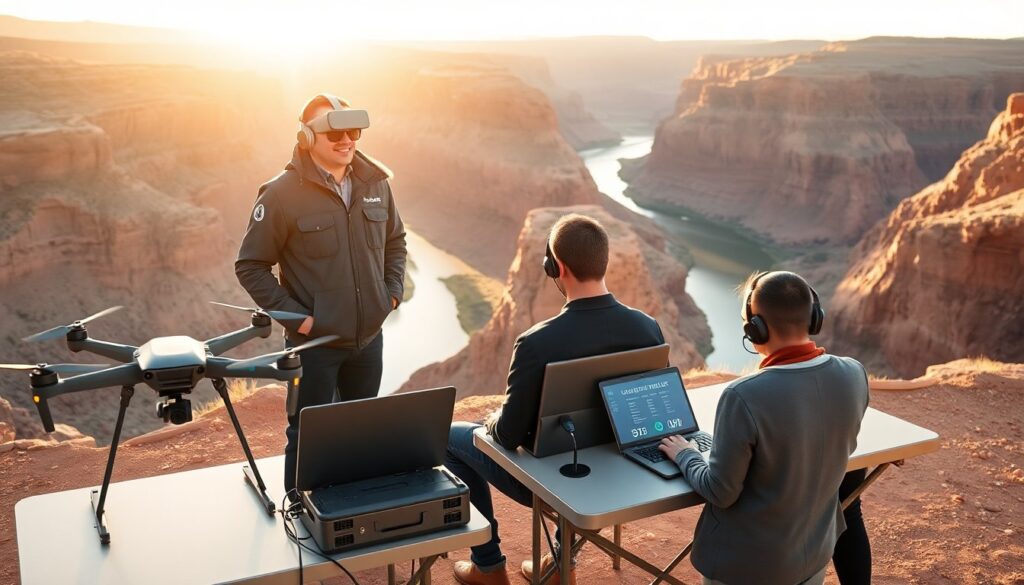
CanyonGross builds each trip to deliver thrilling but controlled aerial views. Guests arrive at a staging area. Staff check gear and explain the flight plan. The team fits each guest with a VR headset and an audio pack. The pilot runs a short calibration flight to check signal and wind. The flight follows preapproved corridors that avoid private land and protected areas.
Passengers see canyon walls, braided rivers, and rock ledges in crisp resolution. The feed shows altitude, speed, and compass data on a subtle overlay. The pilot verbally describes key features while the view moves. Guests may request short hover points for clearer observation. The operator pauses the camera during landing to reduce motion discomfort.
Each trip lasts about 20 to 30 minutes on average. The operator suggests light clothing and closed-toe shoes. The company limits group size to keep the experience focused. They also provide a short safety briefing that covers headset removal, emergency stops, and where to look during fast turns.
CanyonGross updates routes as seasons change. The operator times flights to catch golden-hour light or river flows after rain. Weather and airspace rules sometimes force cancellations. The staff notifies guests promptly and offers reschedules or refunds. The company documents each flight for training and quality control: it does not publish raw footage without consent.
Many guests feel strong presence and a mild adrenaline lift. Some guests report brief disorientation when they remove the headset. Staff recommend a five-minute seated recovery before driving. CanyonGross offers a low-motion option that keeps camera movements slow and wide for viewers sensitive to motion.
Pricing varies by route and time of day. The company lists add-ons such as on-board narration, photo packages, and post-flight edited clips. Group and private bookings receive priority scheduling during peak season. CanyonGross publishes a clear cancellation and liability policy on its site and during booking.
How The VR Drone Experience Works: Tech, Safety, And Setup
CanyonGross uses custom drones and commercial VR rigs. Engineers select high-frame-rate cameras to reduce blur. The system streams video over a low-latency link to the ground station. The ground station relays the signal into headsets that use low-persistence OLED panels. The stack reduces lag and sharpens motion.
Pilots control the drone with redundant radio links. The craft includes obstacle sensors and geofencing. The software returns the drone to a safe point if signal drops. The company performs battery checks and preflight diagnostics before each sortie. A trained technician monitors telemetry and video quality during the entire flight.
Safety rules restrict flights over crowds and along utility corridors. The team files flight notices when required. They carry spotters to watch for unexpected aircraft and to enforce exclusion zones. The pilot keeps a clear line of sight and may pause the video feed if a safety issue appears. Guests receive a short waiver that states the risks and emergency procedures.
CanyonGross applies regular maintenance schedules to aircraft and VR gear. Technicians replace parts on a calendar and after specific flight hours. The company audits data logs to spot anomalies. They keep backup headsets and spare batteries to avoid mid-session cancellations.
The setup process moves fast. Staff tests headsets for fit and lens alignment. The pilot pairs a headset with a unique feed to prevent cross-feed. The team calibrates head tracking and stabilizes the image before takeoff. Staff confirms that each guest understands hand signals and headset removal steps.
CanyonGross trains pilots in both aviation rules and guest experience. The program requires simulator time, logged flight hours, and supervised public flights. Pilots follow a standard script to orient guests and to describe safety steps. The company monitors guest feedback and updates training materials on a regular cycle.
Tips For First-Time Pilots And Best Viewing Practices
First-time guests should rest well before the flight. They should avoid heavy meals and alcohol. Guests should arrive ten to fifteen minutes early to complete forms and fit the headset. They should state any motion sensitivity during check-in.
Viewers should hold still and look where the pilot guides them. Small head movements improve immersion but large sudden turns can cause motion blur. Guests should use the soft strap on the headset and keep feet grounded while seated. If nausea begins, guests should signal and staff will pause the feed and remove the headset.
First-time pilots should listen closely during the briefing. They should follow the pilot’s instructions and avoid touching headset cables. They should ask for a slow-motion option on the first flight. Pilots should practice one or two short flights before booking longer routes.
Guests should protect their vision after a flight by resting eyes for a few minutes. They should avoid phone screens immediately if they feel disoriented. If a guest plans to drive after the flight, staff recommends a short waiting period.
For better photos, guests should request the photo package before takeoff. The company syncs timestamped images to each headset feed so guests receive stills that match key viewpoints. Guests who want video highlights should choose the edited clip option: the editor cuts shorter segments and stabilizes the image for comfortable viewing.
CanyonGross keeps a list of common questions and answers on its booking page. Guests should check that page for details on weather policies, age limits, and accessibility options. Staff will assist guests with mobility needs and offer alternate viewing setups when possible.