
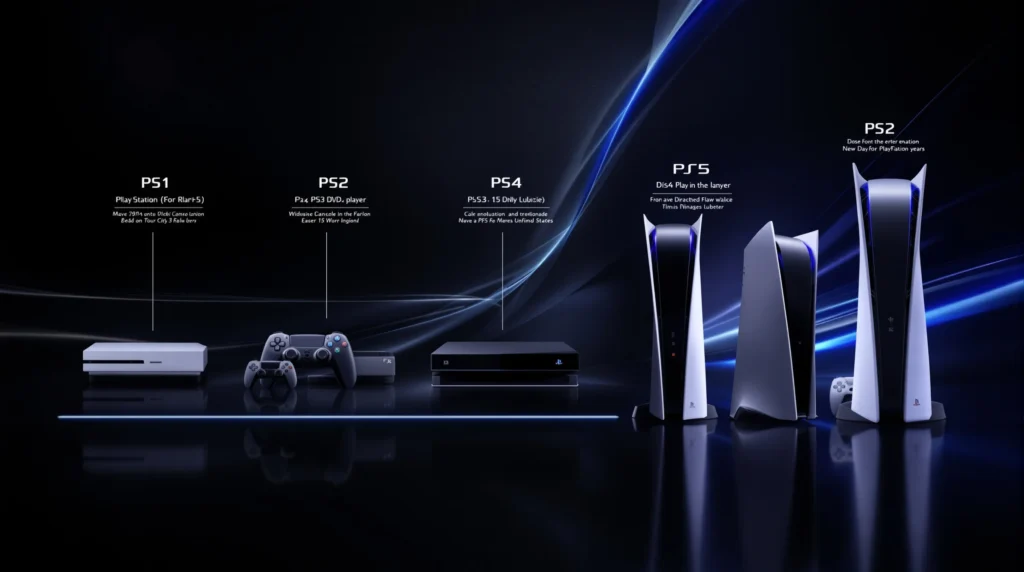
Picture this: It’s 1995. You’re sitting cross-legged on the carpet, clutching a controller that feels like a spaceship’s steering wheel. The PlayStation logo flashes on your tube TV, and for a second, you forget about homework, chores, or anything else. That moment—pure, electric anticipation—kicked off a timeline of PlayStation consoles that would change gaming forever. If you’ve ever wondered how we got from blocky polygons to lifelike worlds, you’re in the right place. This timeline of PlayStation consoles isn’t just about hardware; it’s about the wild ride of discovery, mistakes, and jaw-dropping leaps that shaped how we play.
The Birth of PlayStation: 1994–2000
PlayStation (PS1): The Risk That Paid Off
In December 1994, Sony launched the original PlayStation in Japan. It hit North America in September 1995. The stakes? Huge. Sony was a newcomer, and the gaming world was dominated by Nintendo and Sega. But the PlayStation’s 3D graphics, CD-based games, and iconic gray design made it an instant hit. Titles like Final Fantasy VII, Metal Gear Solid, and Gran Turismo didn’t just sell millions—they created lifelong fans. By 2000, over 100 million units had found their way into living rooms. Here’s the part nobody tells you: Sony almost didn’t make the PlayStation. Their failed partnership with Nintendo could’ve ended it all. Instead, it sparked a revolution.
PlayStation 2: The King of Consoles (2000–2006)
Why PS2 Still Matters
March 2000. The PlayStation 2 arrives in Japan, and the world’s never the same. The PS2 didn’t just play games—it played DVDs, which was a big deal when DVD players cost as much as the console itself. If you grew up in the early 2000s, you probably remember watching movies and playing Grand Theft Auto: San Andreas on the same machine. The PS2’s library exploded with hits: Shadow of the Colossus, God of War, Kingdom Hearts. By the time Sony stopped production in 2013, the PS2 had sold over 155 million units, making it the best-selling console ever. Here’s why: it was affordable, reliable, and had something for everyone.
PlayStation 3: Ambition Meets Reality (2006–2013)
Learning the Hard Way
November 2006. The PlayStation 3 launches with a price tag that made wallets cry—$599 in the US. Sony bet big on Blu-ray, powerful hardware, and a bold new design. But early sales lagged behind the Xbox 360 and Nintendo Wii. Developers struggled with the PS3’s complex architecture, and gamers grumbled about the cost. Still, the PS3 found its groove with time. Games like The Last of Us, Uncharted 2, and LittleBigPlanet showed what the system could do. By 2013, the PS3 had sold over 87 million units. The lesson? Ambition’s great, but you’ve got to listen to your players.
PlayStation 4: The Comeback Kid (2013–2020)
Winning Back the Crowd
November 2013. Sony launches the PlayStation 4, and this time, they nail it. The PS4 focused on what gamers wanted: powerful hardware, easy development, and a social experience. Remember the “Share” button? Suddenly, everyone could stream, screenshot, and brag about their victories. The PS4’s library reads like a greatest hits album: Bloodborne, Horizon Zero Dawn, Spider-Man, God of War (2018). By 2020, over 117 million PS4s had been sold. If you’ve ever felt the thrill of a midnight launch or the agony of a server crash, you know the PS4 era was about community as much as technology.
PlayStation 5: The Future Is Now (2020–Present)
Speed, Style, and Shortages
November 2020. The PlayStation 5 lands with a thud—literally, if you’ve ever tried to fit it under your TV. The PS5’s lightning-fast SSD, DualSense controller, and near-instant load times feel like magic. But let’s be real: getting your hands on one was a quest worthy of a Dark Souls boss fight. Scalpers, shortages, and endless “out of stock” notifications became the norm. Still, the PS5’s early hits—Demon’s Souls remake, Ratchet & Clank: Rift Apart, Returnal—showed what next-gen gaming could be. If you’ve ever refreshed a retailer’s website a hundred times, you know the struggle. The timeline of PlayStation consoles keeps moving, and the PS5 is just getting started.
Handhelds and Side Quests
PlayStation Portable (PSP) and PlayStation Vita
Let’s break it down: Sony didn’t just stick to living room consoles. The PSP (2004) brought PlayStation games to your pocket, selling over 80 million units. The PlayStation Vita (2011) pushed boundaries with its OLED screen and remote play, but never caught on like its older sibling. If you ever played Persona 4 Golden on a Vita during a long bus ride, you know handhelds have their own magic. Still, the main timeline of PlayStation consoles remains the home systems.
What the Timeline of PlayStation Consoles Teaches Us
Lessons, Surprises, and What’s Next
Here’s the part nobody tells you: every PlayStation console came with risks, mistakes, and wild bets. Sony’s journey is full of surprises—like the PS2’s DVD gamble or the PS3’s rocky start. If you’ve ever felt left behind by new tech, you’re not alone. The timeline of PlayStation consoles is for anyone who loves games, but also for those who’ve ever doubted, failed, or tried again. It’s not for people who want things to stay the same. Each generation brought new ways to play, new communities, and new stories.
- PS1: The underdog that started it all
- PS2: The king of the living room
- PS3: Ambition with a price
- PS4: The comeback and community builder
- PS5: The future, still unfolding
If you’re reading this, you’re part of the story. The timeline of PlayStation consoles isn’t just about machines—it’s about the moments, the friends, and the memories we make along the way. Next steps? Grab a controller, pick a game, and keep playing. The best part of the timeline is always the next chapter.