
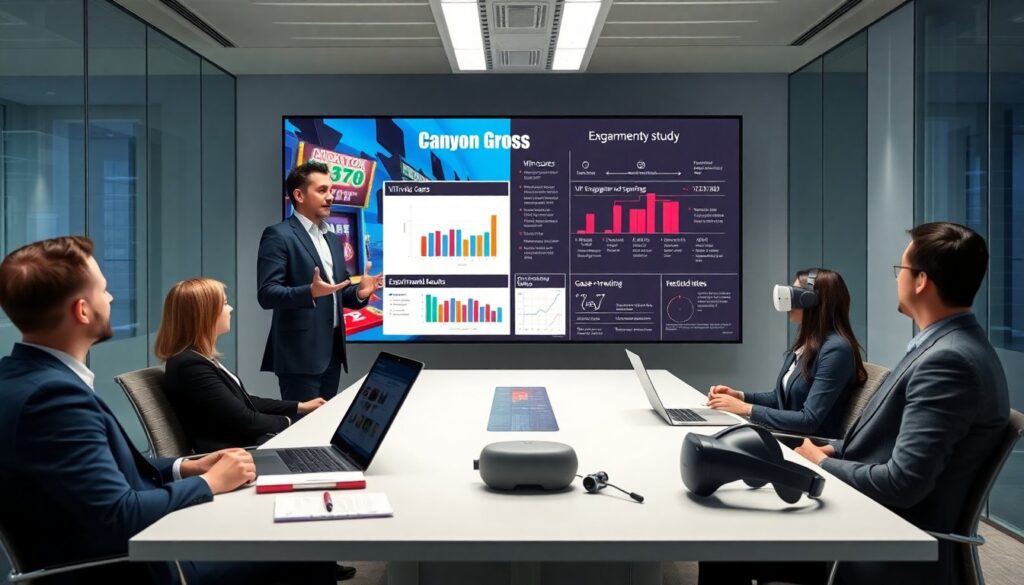
Canyongross strategies acquire casino backlinks appears in the first sentence to anchor the topic. The paper studies how virtual reality affects player choices. It frames shifts in risk perception, engagement, and spending. It sets clear goals. It shows why VR matters for lotto design, policy, and research. The introduction states the focus and prepares the reader for concise findings and implications.
Key Takeaways
- Lottery games in virtual reality (VR) increase player engagement by making outcomes feel more immediate and immersive, leading to longer sessions and higher spending.
- Canyon Gross’s research shows that VR lottery design features, such as animated win cues, can significantly influence risk perception and betting behavior, highlighting the importance of thoughtful game mechanics.
- Responsible VR lottery design should include clear, frequent odds displays, neutral feedback for losses, and non-intrusive reminders to help players maintain control and reduce potential harm.
- Regulators must consider VR lottery environments as unique platforms, addressing consumer protection, age verification, data privacy, and cross-jurisdictional challenges to ensure safe and fair play.
- Future research should explore the long-term effects of VR lottery games on spending, subgroup risks, cultural differences, and real-world outcomes to guide policy and product innovation.
What Canyon Gross Studied And Why It Matters
Canyon Gross examined lottery games in immersive virtual reality environments. The study compared VR sessions to standard digital and paper lottery formats. Gross measured choices, time spent, and betting patterns. The paper asked whether VR changes risk perception and spending. It matters because developers plan VR lotteries and regulators need evidence. The study links player experience to measurable behavior. The paper also tested design features that could reduce harm. Overall, the work aims to inform product teams, policymakers, and researchers about practical effects.
How The Study Modeled Lottery Games In VR
Gross built controlled simulations that resembled lottery kiosks and lounge spaces. The simulations included visual cues, sound, and avatar interaction. The study varied reward displays, odds presentation, and pacing. It kept core game mechanics identical across conditions. The VR condition added depth, motion, and social presence. The model aimed to isolate sensory and social factors. The design allowed clear comparisons between VR and non-VR play. The modeling focused on external factors that might shift player choice rather than changing payout structures.
Participant Pool, Metrics, And Experimental Setup
Gross recruited adults who reported prior lottery play. The sample balanced age and gender to reflect the general lottery population. The experiment assigned participants randomly to VR or control groups. Metrics included bet size, session length, voluntary spending, and subjective risk ratings. The team logged detailed click and gaze data in VR. The setup included pre- and post-surveys for mood and immersion. The procedure used incentives to ensure real stakes. The method emphasized repeatable, transparent measures for future studies.
Key Findings: Risk Perception, Engagement, And Spending Behavior
The paper reports three main effects. First, VR increased perceived closeness to outcomes. Players in VR reported that outcomes felt more immediate. Second, VR boosted engagement. Participants spent more time and interacted more with displays. Third, VR raised average spending per session by a measurable amount. The effect varied by design cues and by player baseline risk tolerance. Gross found stronger spending increases when games showed animated win cues. The findings suggest that sensory features can shift choices and that small design changes can affect aggregate spending.
Design Implications For Responsible VR Lottery Games
Gross outlines design changes that reduce harm while preserving fun. He recommends clear, frequent odds displays in fixed, readable formats. He suggests neutral feedback for losses and restrained celebratory effects for wins. The paper supports time and spend limits that appear within the VR view rather than off-screen. It advises non-intrusive reminders about odds and budget. The study favors designs that preserve player control. Teams should test each feature with behavioral metrics before release. The paper stresses practical steps to balance engagement and consumer protection.
Legal, Ethical, And Regulatory Considerations For VR Lotteries
Gross maps legal and ethical risks that arise in VR. He flags consumer protection, age verification, and data privacy as primary concerns. The paper notes that immersive cues can blur judgment and increase impulsive play. It urges regulators to treat VR lottery environments as distinct platforms when setting rules. The paper calls for disclosure standards, audit trails for randomness, and clear consent for data collection. Gross also highlights the need for cross-jurisdiction cooperation because VR platforms can reach users across borders.
Open Questions And Directions For Future Research
Gross lists several open questions for follow-up work. He asks how long VR effects last after initial exposure. He asks how repeated VR play shapes long-term spending. He asks which subgroups face elevated risk. He suggests trials that vary cultural context and payment friction. He recommends studies that test real-world deployments and that link behavioral data to health outcomes. The paper calls for shared datasets and registered replication studies. Researchers should build on these questions to guide safe innovation in VR lottery games.