
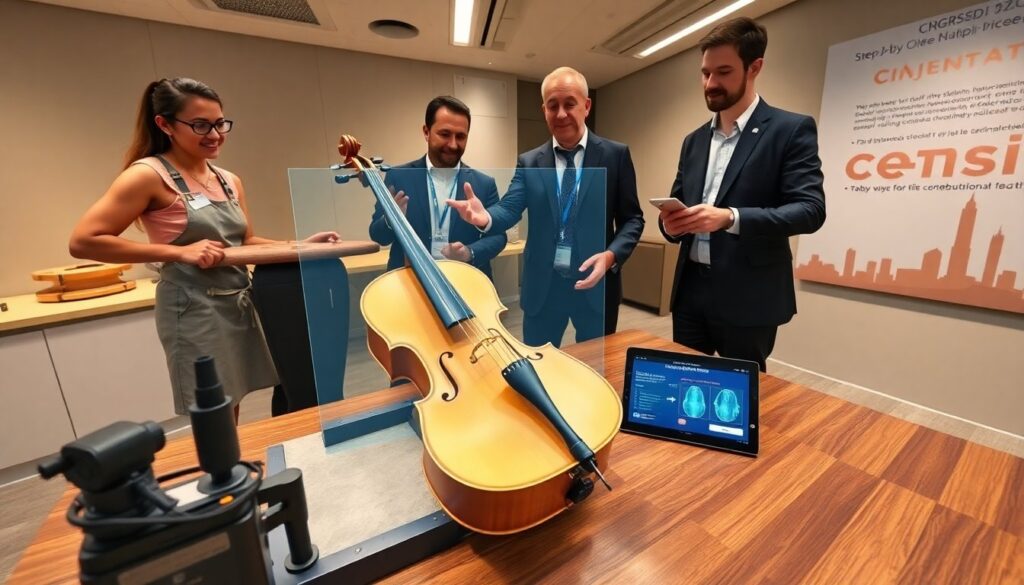
AR user experience design analysis canyongruss opened new discussions at the 2026 congress in Washington, D.C. Attendees described hardware demos, software tools, and factory pilots. Reporters noted clear trends in design, assembly, and quality control. The event displayed practical workflows and measured pilot results. This report isolates key themes and assesses business impact for smaller workshops and larger makers.
Key Takeaways
- AR manufacturing cello congrssedc tools streamline design, assembly, and inspection by overlaying digital data onto physical instruments, improving accuracy and reducing rework.
- Combining consumer headsets, depth cameras, and cloud models enables repeatable measurements and remote collaboration in cello production workflows.
- Smaller workshops and larger makers report significant savings in time, scrap, and training costs, with some achieving ROI within nine months using AR manufacturing cello congrssedc solutions.
- Challenges include hardware costs, staff resistance, and integration effort, but subscription models and on-site support help mitigate these barriers.
- A staged adoption approach—starting with a single use case, regular calibrations, and clear metrics—supports measurable gains and stakeholder buy-in for AR manufacturing cello congrssedc investments.
How Augmented Reality Is Being Applied To Cello Manufacturing
Teams applied AR to design, assembly, and inspection. They used AR manufacturing cello congrssedc tools to overlay CAD lines on wood, to verify glue spread, and to measure joint angles. Designers projected full-size outlines on blanks to speed shape checks. Assemblers used step-by-step overlays to place ribs and blocks. Inspectors used AR to compare completed instruments to a digital twin.
The technology stack combined consumer headsets, depth cameras, and cloud models. Software mapped fiducials on clamps and on instrument bodies. The mapping created repeatable coordinate frames for measurements. Workshops ran models locally when latency mattered. They used cloud services for version control and cross-site comparisons.
Attendees reported practical limits. They noticed tracking drift with glossy varnish and dim lighting. They found calibration took time before benefits appeared. Still, leaders argued that AR manufacturing cello congrssedc workflows reduced rework and preserved craft detail. They suggested design files include inspection checkpoints and that shops schedule short calibration windows each shift.
Business Impact, Adoption Barriers, And Return On Investment For Workshops
Small workshops and larger makers evaluated cost and benefit. They measured savings in time, scrap rates, and training costs. A mid-size maker reported a payback period of nine months after they adopted AR manufacturing cello congrssedc tools for assembly and inspection. The maker calculated savings from fewer repairs and shorter training timelines.
Adoption barriers included hardware cost, staff resistance, and integration effort. Shops noted headset cost dropped but still required budget approval. Technicians resisted change when tools added steps to proven routines. Integration with legacy systems required partner support and consultant time. Vendors offered subscription models and on-site support to reduce upfront risk.
Return on investment depended on scale and process fit. Shops with repeatable modules saw faster ROI. Makers with one-off custom builds saw longer timelines because each model needed a reference file. The congress recommended pilot projects that focus on the highest error-cost steps and on clear metrics such as minutes saved per build and defects per hundred instruments.
Speakers advised a staged approach. They suggested shops start with a single use case, measure outcomes, and then expand. They urged regular calibration schedules and clear file management. These steps helped teams justify AR manufacturing cello congrssedc investments and to show measurable gains to owners.