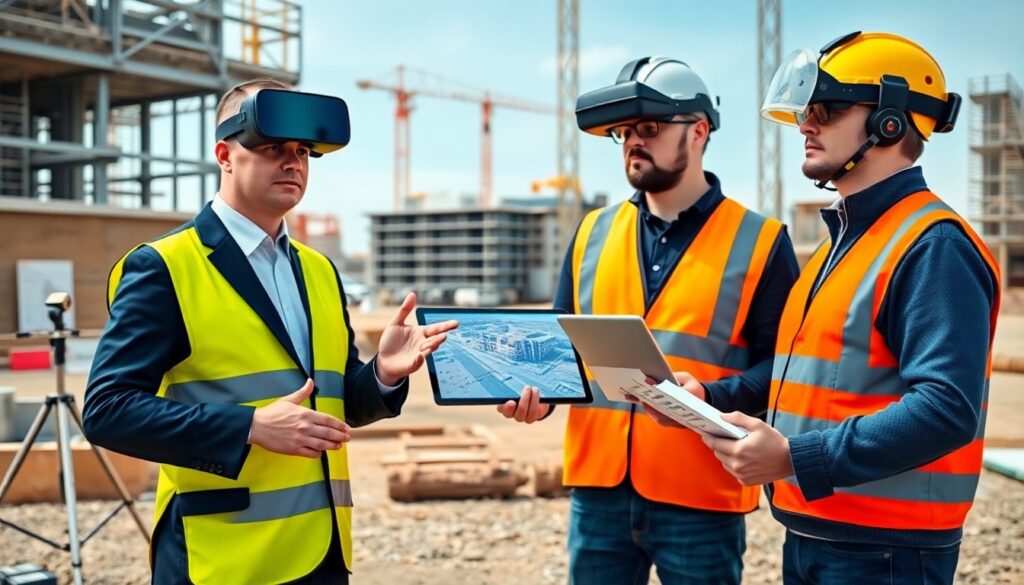
Virtual reality construction cnyngrsstgb appears at job sites in 2026. It gives teams fast visual context and clear decision data. Project managers use it to check models, train crews, and reduce rework. Field teams use it to compare design against real conditions. Stakeholders use it to approve changes before physical work starts.
Key Takeaways
- Virtual reality construction cnyngrsstgb enhances project accuracy by providing fast visual context and reducing costly rework on job sites.
- Project managers and field teams use virtual reality construction cnyngrsstgb for model checks, training, and real-condition comparisons to improve coordination and safety.
- CNYNGRSSTGB integrates design models, sensor data, and scheduling to streamline workflows, reduce RFIs, and maintain project milestones effectively.
- Deploying virtual reality construction cnyngrsstgb involves selecting appropriate hardware, managing model updates carefully, and training crews for efficient use and issue tracking.
- The technology shortens approval cycles, lowers risk for owners, and supports compliance verification, making it a valuable tool for stakeholders and investors.
- Consistent VR workflow updates and clear adoption metrics ensure virtual reality construction cnyngrsstgb delivers ongoing savings and improved project outcomes.
Why Virtual Reality Is Becoming Essential In Construction
Virtual reality construction cnyngrsstgb drives faster approvals on projects. Owners request VR reviews to lower risk. Architects produce VR views to show finish quality. Contractors use VR to find clashes before crews arrive. Engineers run VR checks to validate systems and clear build sequences. Foremen use VR headsets to teach sequences and show hazards. Safety teams adopt VR drills to reduce incidents. Inspectors compare VR models to site conditions to catch errors early. Clients experience spaces in VR and make clearer choices. The technology shortens review cycles and cuts costly change orders. The technology reduces guesswork and raises confidence across teams. Project schedules tighten because teams avoid repeated work.
Understanding CNYNGRSSTGB: Concept, Use Cases, And Industry Impact
CNYNGRSSTGB refers to a VR workflow that blends design models, sensor feeds, and scheduling. Firms adopt CNYNGRSSTGB to link BIM files with live site scans. They use the workflow for layout verification and for safety planning. They use it for client walkthroughs and for bidding demonstrations. In retrofit jobs, teams use CNYNGRSSTGB to match existing conditions to models. In large-scale builds, teams use it to test logistics and crane zones. The method reduces RFIs because teams see conflicts in VR. The method improves coordination between trades. It reduces material waste by avoiding mistaken orders. The method helps teams keep milestones. Firms that deploy CNYNGRSSTGB report fewer defects and better handovers. The impact extends to workforce training. New hires use CNYNGRSSTGB to learn complex sequences before they touch tools. Seniors use it to document methods and to scale their knowledge. Investors view firms that use CNYNGRSSTGB as more modern and more reliable. Regulators accept VR records as proof of compliance in some cases. The concept links separate project data streams into a single visual layer. Teams save hours per week when they adopt CNYNGRSSTGB for routine checks.
Tools, Workflows, And Best Practices For Deploying VR On Site
Teams pick hardware that fits the task. They choose tethered headsets for detailed model review. They choose stand-alone headsets for quick site checks. They use 360 cameras to capture real site context. They integrate lidar scanners to align models with as-built conditions. They connect project servers to stream updated models to headsets. They keep model size small to avoid lag. They name files with clear version tags so teams avoid confusion. They set a single source of truth and assign one person to manage model updates. They run short VR sessions and keep agendas tight. They check battery levels and headset hygiene before each session. They train two crew members to operate the headset and to guide walkthroughs. They assign roles for notetaking, model control, and action tracking. They log issues in a cloud system and assign tasks the same day. They measure adoption with simple metrics: session count, issues found, and rework savings. They pilot CNYNGRSSTGB on one trade before wider rollout. They scale training after the pilot shows clear savings. They protect data with access controls and encrypted transfers. They keep backup workflows if the headset fails so work does not stop. They set clear rules for when VR results drive change orders. They use short checklists so teams apply VR outputs consistently. They review lessons weekly and refine the workflow. They report savings to leadership to secure ongoing budget for VR tools. They track how many times virtual reality construction cnyngrsstgb prevented onsite rework. They track how virtual reality construction cnyngrsstgb shortened approval cycles. They share simple before-and-after examples to build trust. They keep the process practical so field crews adopt it quickly. They update the VR content after each major site milestone so virtual reality construction cnyngrsstgb stays accurate.