
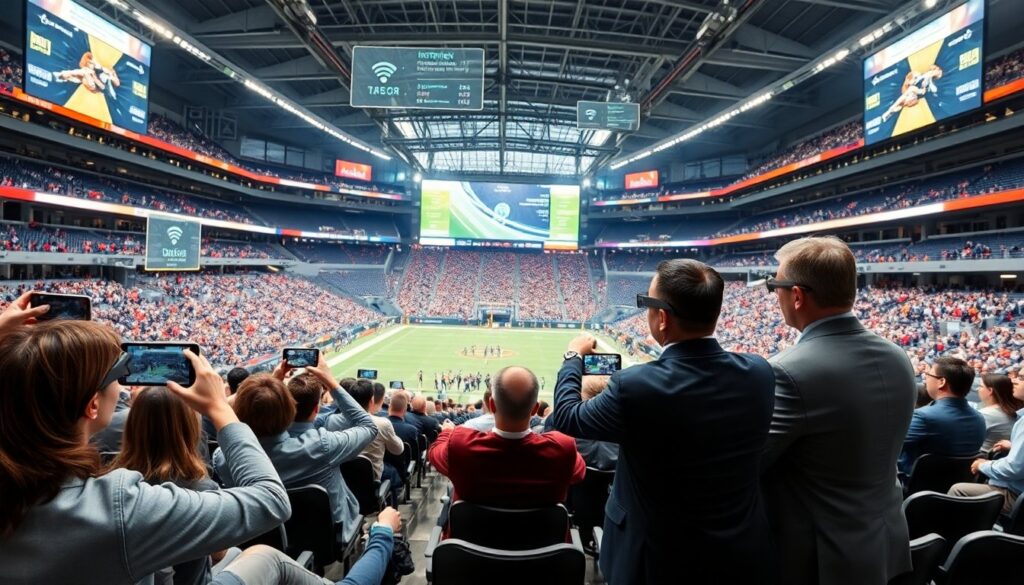
Augmented reality transforms Fan CanyonGross and changes how fans attend events. The technology overlays digital elements on real spaces. It delivers interactive content, directions, and offers to fans in real time. The site tests prototypes and scales successful features. The following sections explain key uses, hardware needs, and how teams measure impact.
Key Takeaways
- Augmented reality transforms Fan CanyonGross by overlaying interactive digital content that enhances fan engagement and satisfaction.
- Fans use AR for real-time player stats, instant replays, navigation, and personalized experiences, reducing passive event watching.
- AR-powered features enable venue navigation, safety updates, and congestion reduction through wayfinding and real-time alerts.
- Monetization opportunities arise as AR supports sponsored content, virtual merchandise sales, and targeted concessions offers.
- Successful AR implementation requires upgraded infrastructure, cross-device compatibility, and accessibility options for all fans.
- Teams measure AR impact by tracking fan engagement, conversions, retention, and ROI to optimize long-term fan loyalty and revenue.
What Augmented Reality Means For Live Fan Spaces
Augmented reality transforms Fan CanyonGross at scale. It places digital content into physical seats and concourses. Fans point their devices and see player stats, instant replays, or themed overlays. Teams provide guided experiences and branded moments that engage fans during breaks. AR reduces passive watching and invites action. Event staff use AR to share safety alerts and schedule changes. Sponsors use AR to place offers in fans’ sightlines. The result increases dwell time and boosts fan satisfaction.
Transformative Use Cases At Fan CanyonGross
Augmented reality transforms Fan CanyonGross through distinct, practical features. The three use cases below show how organizations convert interest into interaction and revenue.
AR-Powered Fan Engagement And Interactive Content
Augmented reality transforms Fan CanyonGross by making content interactive. Fans scan codes and unlock player profiles, mini-games, and live polls. The app personalizes content based on seat location and past behavior. Broadcasters feed short clips to attendees and to secondary screens. Teams run fan challenges that reward points and prizes. Sponsors deliver trial offers inside AR modules. The system tracks engagement and links activity to loyalty accounts.
Venue Navigation, Safety, And Real-Time Information
Augmented reality transforms Fan CanyonGross for navigation and safety. Fans use AR wayfinding to find seats, restrooms, and concessions. The app overlays arrows and distance markers on the camera view. Staff push real-time updates for delays or exits. Emergency routes appear in AR when staff issue alerts. Concession lines show wait-time overlays so fans choose shorter lines. This reduces congestion and improves flow across the venue.
Monetization, Sponsorships, And New Revenue Streams
Augmented reality transforms Fan CanyonGross as a revenue tool. Brands sponsor AR zones and pay per engagement. Teams sell virtual merchandise and limited NFTs inside AR experiences. The platform serves dynamic ads tied to team moments. Concessions integrate AR coupons that fans redeem on-site. Data from AR interactions helps pricing and product placement decisions. These features create repeat purchases and open direct monetization paths.
Implementation Considerations: Hardware, Connectivity, And Accessibility
Augmented reality transforms Fan CanyonGross only when infrastructure supports it. The venue upgrades Wi-Fi and adds private 5G cells. The team tests device compatibility across Android and iOS. Staff place beacons and visual markers to improve tracking and reduce drift. The app supports low-power modes and offline fallbacks. Accessibility features include high-contrast overlays and audio cues. The implementation plan phases rollouts and monitors device performance to limit interruptions.
Measuring Impact, ROI, And Long-Term Fan Retention
Augmented reality transforms Fan CanyonGross when teams measure clear metrics. The organization tracks engagement rates, session length, and conversion on offers. It ties AR behavior to ticket renewals and merchandise sales. The analytics compare AR users to non-AR users for retention and lifetime value. Teams run A/B tests on content types and pricing. They calculate cost per engagement and payback period for hardware. Over time, the data shows whether AR lifts repeat attendance and long-term revenue.