
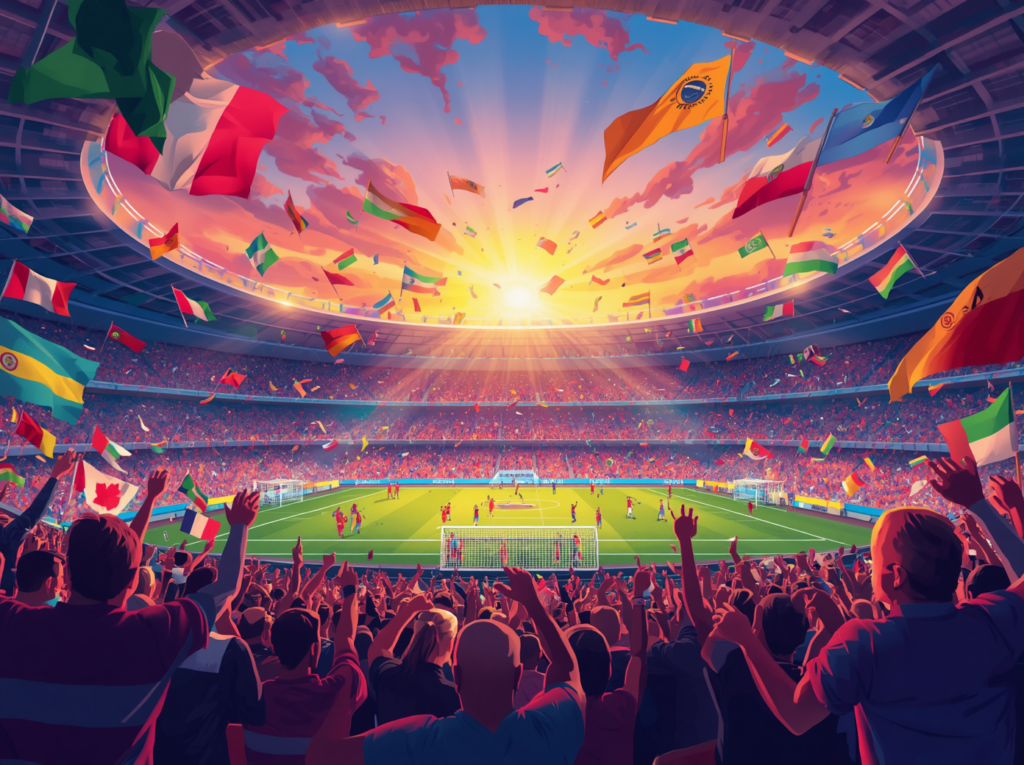
World football is about to undergo one of its greatest historical transformations. As the next FIFA cycle approaches, many fans are already looking at how to prepare for betting and analysis. It is essential to know how to log betfair to follow the odds and markets that will emerge with these changes. The 2026 World Cup 48-team format is not just a numerical expansion, but a complete restructuring that will alter the tournament’s dynamics, the national teams’ calendars, and the logistics of the host countries: Canada, the United States, and Mexico.
In this article, we detail every aspect of this change, from the group stage to the path to the grand final.
Why Change to 48 Teams?
FIFA’s decision to expand the tournament from 32 to 48 national teams is primarily aimed at global inclusion. By increasing the number of spots, federations from Africa, Asia, and Central America gain more opportunities to feature on the sport’s main stage.
For fans and bettors, this means a much larger volume of games—passing from 64 to 104 matches in total. This abundance of clashes requires the public to pay close attention to analysis platforms, understanding that the level of competitiveness in the early stages can vary drastically.
How Will the 2026 World Cup 48-Team Format Work?
The structure approved by the FIFA Council features a more robust group stage and an additional knockout round. Check out the details:
The Group Stage
Unlike what was initially proposed (groups of three teams), FIFA opted to maintain sporting integrity with 12 groups of 4 teams each.
- The top two teams from each group advance directly.
- The 8 best third-placed teams also secure a spot in the next phase.
This configuration avoids the risk of collusion (agreements between teams in the final round) and ensures that each national team plays at least three matches in the tournament.
The New Knockout Stage: Round of 32
With the increase in national teams, the need arose for an extra knockout stage before the Round of 16. Now, we will have the Round of 32. From there on, the format follows the traditional single-elimination model until the final.
To win the title, the champion team will now need to play 8 matches, instead of the traditional 7 that had been the standard since 1974.
Slot Allocation by Confederation
The 2026 World Cup 48-team format directly benefits regions that historically had few slots. Here is the approximate breakdown:
- AFC (Asia): 8 direct slots + 1 playoff slot.
- CAF (Africa): 9 direct slots + 1 playoff slot.
- CONCACAF (North, Central America, and the Caribbean): 6 direct slots (including the 3 hosts) + 2 playoff slots.
- CONMEBOL (South America): 6 direct slots + 1 playoff slot.
- OFC (Oceania): 1 direct slot + 1 playoff slot.
- UEFA (Europe): 16 direct slots.
For South America, this means that almost all national teams have real chances of qualifying, making the Qualifiers a valuable testing ground for those who like to analyze performance statistics.
Logistical Impact and the Three-Country Cup
For the first time, the World Cup will be organized by three nations simultaneously. Logistics will be a separate challenge, with host cities spread across different time zones and varying climates (from Mexican heat to Canadian summer).
The 16 host cities have been divided into regions (West, Central, and East) to try to minimize team travel during the group stage. However, as the knockout stage progresses, the players’ physical endurance will be tested to the limit, which is a crucial factor for those analyzing the betting market and long-term performance.
What to Expect from 2026?
The new 2026 World Cup 48-team format promises to be an unprecedented celebration. We will have more football, more cultural diversity on the pitch, and an extended competition period of almost 40 days.
For the Brazilian fan, the expectation is to see how the Seleção will adapt to a longer and more exhausting tournament. For analysts, the increase in the number of games opens up a gigantic range of professional opportunities for coverage and engagement. Get ready, because the gigantism of football is just beginning to take on new shapes.