
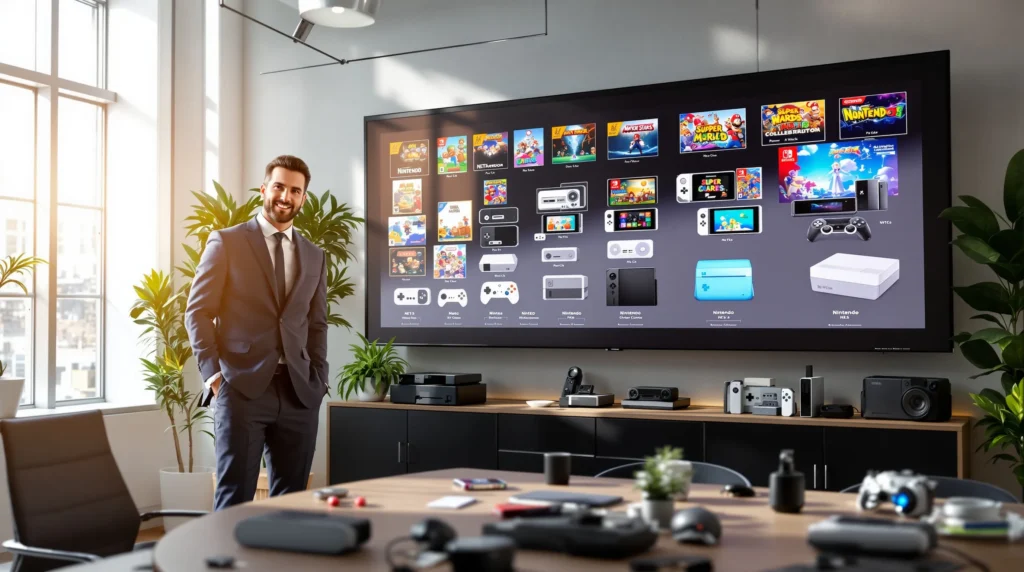
Blow the dust off an old NES cartridge and you’ll feel it: the spark of discovery that started the evolution of Nintendo consoles. If you’ve ever jammed a controller button so hard your thumb ached, you know this story isn’t just about plastic and pixels. It’s about how Nintendo’s consoles grew up with us, surprising us, frustrating us, and—sometimes—teaching us to see play in a whole new way.
8 Bits, Big Dreams: The NES Era
Picture 1985. The living room glows with static from a boxy TV. The Nintendo Entertainment System (NES) lands in North America, and suddenly, video games aren’t just for arcades. The NES, with its 8-bit graphics and unforgettable gray-and-red controller, didn’t just revive a dying industry—it made Mario a household name. If you’ve ever blown into a cartridge, you know the ritual. The NES sold over 60 million units, and its simple, blocky worlds felt limitless.
Here’s the part nobody tells you: The NES wasn’t the first home console, but it was the first to make parents and kids fight for playtime. The evolution of Nintendo consoles started with a promise—games could be for everyone, not just tech geeks or kids with quarters.
Leveling Up: Super Nintendo and the 16-Bit Leap
Fast forward to 1991. The Super Nintendo Entertainment System (SNES) arrives, and everything looks sharper, sounds richer, and feels smoother. The SNES brought 16-bit graphics, Mode 7 effects (think spinning racetracks in Super Mario Kart), and a controller that fit your hands like it was made for you. If you ever lost hours to The Legend of Zelda: A Link to the Past, you know the magic.
The evolution of Nintendo consoles here wasn’t just about more bits. It was about deeper stories, bigger worlds, and the first taste of multiplayer mayhem. The SNES sold over 49 million units, and it taught us that games could be art, not just toys.
Into the Third Dimension: Nintendo 64 and GameCube
1996. You unwrap a Nintendo 64 on your birthday. The controller looks like an alien artifact, but Super Mario 64 blows your mind. Suddenly, you’re running, jumping, and exploring in 3D. The N64’s analog stick changed how we played forever. Four controller ports meant sleepovers turned into all-night GoldenEye tournaments.
Then came the GameCube in 2001. It looked like a purple lunchbox, but it packed a punch. The evolution of Nintendo consoles here meant tighter graphics, tiny discs, and cult classics like Metroid Prime and Super Smash Bros. Melee. The GameCube didn’t outsell its rivals, but it won hearts with its quirky charm and unforgettable games.
Shaking Things Up: Wii and DS
2006. Grandma’s swinging a Wii Remote, and everyone’s laughing. The Wii didn’t care about horsepower—it cared about fun. Motion controls made games feel fresh, and Wii Sports turned living rooms into tennis courts. The Wii sold over 100 million units, proving that the evolution of Nintendo consoles wasn’t about specs—it was about who could play.
Meanwhile, the Nintendo DS put two screens in your pocket. Touch controls, a microphone, and a library packed with hits like Brain Age and Pokémon made it a global sensation. If you ever drew a wobbly dog in Nintendogs, you know the joy.
Stumbles and Surprises: Wii U and 3DS
Here’s where things got messy. The Wii U, launched in 2012, confused people with its tablet controller and clunky marketing. Sales lagged, but the system gave us gems like Splatoon and Mario Maker. The 3DS, on the other hand, brought glasses-free 3D and a second chance for handheld magic. StreetPass made commutes fun, and the library kept growing.
If you’ve ever felt let down by a console, you’re not alone. The evolution of Nintendo consoles isn’t a straight line—it’s full of risks, flops, and wild ideas. That’s what makes it human.
Hybrid Genius: Nintendo Switch
2017. You snap Joy-Cons onto a screen, and suddenly, you’re playing Zelda on the bus. The Nintendo Switch is the payoff for decades of experiments. It’s a home console and a handheld, a party machine and a solo escape. Over 130 million units sold, and counting. The Switch’s secret? It lets you play your way—on the couch, in bed, or on the go.
The evolution of Nintendo consoles reached a new peak here. The Switch library is stacked: Animal Crossing: New Horizons for cozy nights, Super Smash Bros. Ultimate for chaos with friends, Ring Fit Adventure for breaking a sweat. If you’ve ever lost track of time with a Switch in your hands, you know the feeling.
What’s Next? Lessons from Nintendo’s Journey
So, who is this for? If you love play, if you crave surprise, if you want to see how a company can stumble and soar—this story’s for you. If you only care about raw power or the latest graphics, Nintendo’s path might not make sense. But if you’ve ever cheered when Mario jumped, or teared up at a Zelda ending, you get it.
The evolution of Nintendo consoles teaches us that play isn’t about perfection. It’s about trying, failing, and trying again. Nintendo’s biggest wins came from risks—motion controls, dual screens, hybrid play. Its flops? They taught resilience and humility.
Here’s why it matters: The evolution of Nintendo consoles isn’t just a tech timeline. It’s a reminder that joy comes from surprise, connection, and the courage to try something weird. If you’re holding a controller right now, you’re part of that story.
Quick Timeline: The Evolution of Nintendo Consoles
- 1983: Famicom (Japan) / 1985: NES (North America)
- 1990: Super Famicom / 1991: SNES
- 1996: Nintendo 64
- 2001: GameCube
- 2006: Wii
- 2012: Wii U
- 2017: Switch
Final Thoughts: Your Turn to Play
If you’ve ever wondered why Nintendo keeps surprising us, it’s because they never stop playing. The evolution of Nintendo consoles is a story of risk, joy, and the power of a good game. So grab a controller, pick your favorite era, and jump in. The next chapter is yours.